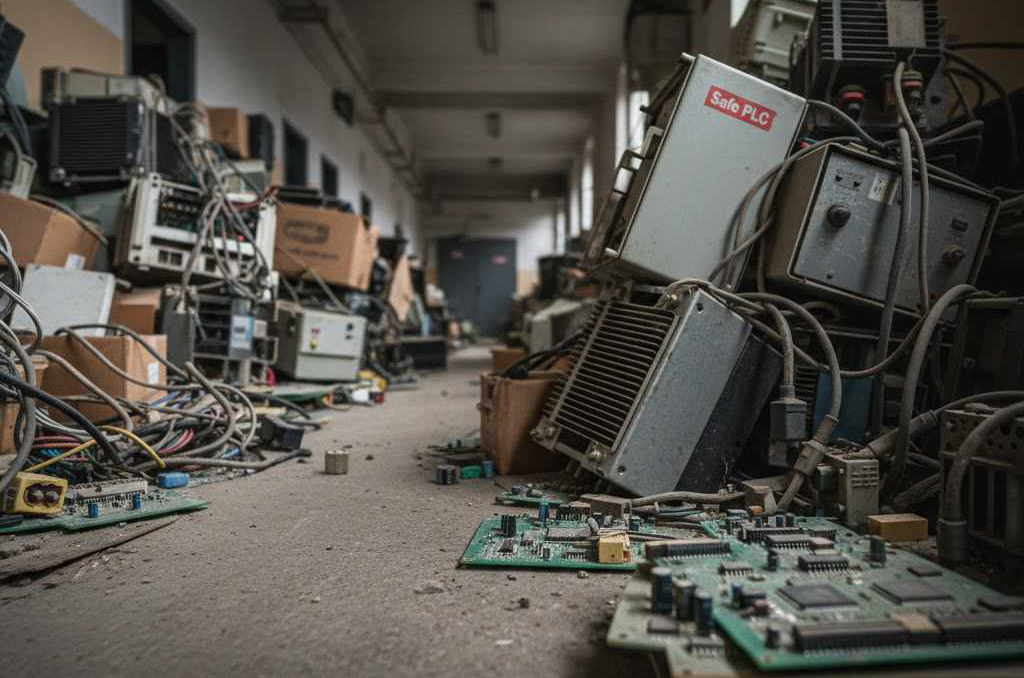
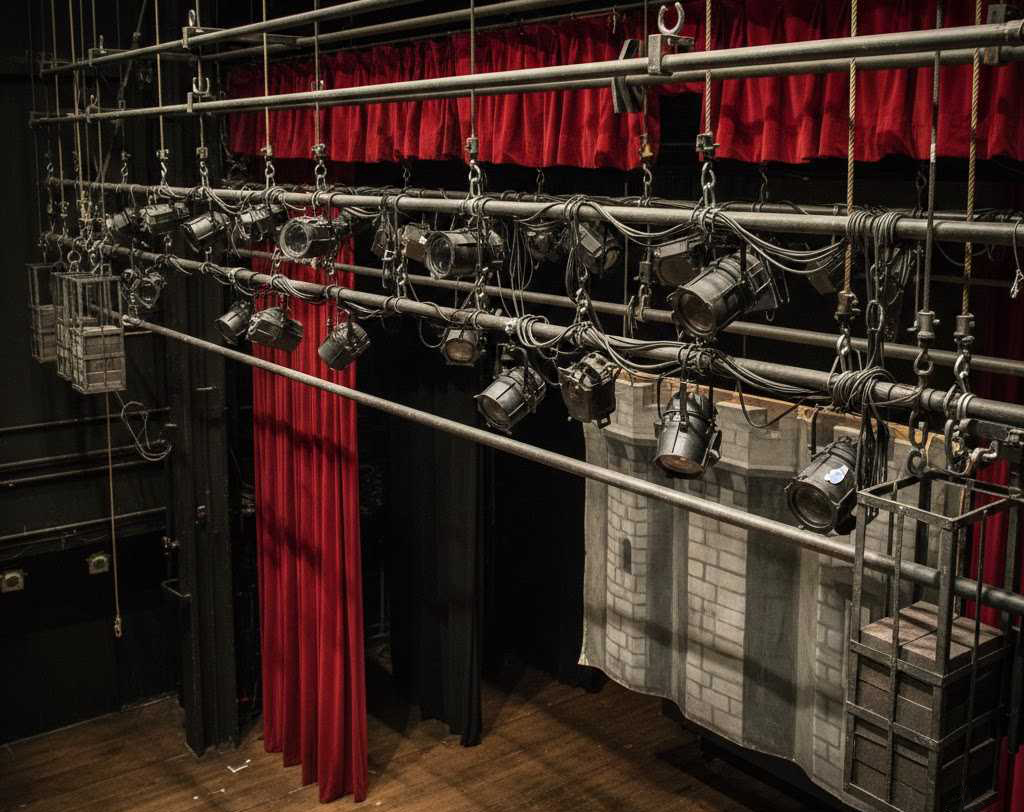
At Blumano we have been involved in several theatre machinery refurbishments. Each of those upgrades involves a new control system and a desire for keeping some or all the mechanical parts. We’re often contacted after a few of those upgrades have been done (over the last 10-15 years) and in some cases, Blumano gets involved from the start. Most of the already completed modifications lack any paperwork of the work being done – and although the result is similar – each one of these cases will face different legal frameworks if the original machinery was installed before or after 2006, or if the upgrade will complete before or after January 2027. However, with each one of them, the same question is raised, “Can a venue upgrade their control system without issuing any legal paperwork?” or “Is it OK for the maintenance company to add a safety edge/door/ESTOP button to a stage lift?”
This analysis compares the Machinery Directive (2006/42/EC) and the new Machinery Regulation (EU) 2023/1230 regarding “changes to the control system”, specifically focusing on replacing a safety PLC with a new device containing new safety logic.
For changes to machinery see our article on substantial modifications.
Quick Answer
Under the current Directive, this scenario is a “grey area” often interpreted as a substantial modification if the safety logic/functions are altered significantly. Under the new Regulation, the definition is explicit: a modification that involves changing the safety control system to handle new risks or guards is legally defined as “substantial.”
Replacing a safety PLC with a new device and new safety logic (not just a 1-to-1 code translation) will almost certainly trigger a substantial modification event under the new Regulation, making you the “new manufacturer” responsible for re-CE marking the machinery.
Machinery Directive 2006/42/EC (Current)
The Text
The Directive itself does not contain a definition of “substantial modification.” The concept is entirely interpretative, based on guidance documents like the Blue Guide and the Guide to Application of the Machinery Directive.
The Concept
A modification is considered “substantial” if:
- It creates new hazards or increases existing risks.
- The existing protective measures are no longer sufficient.
- New protective measures are required to deal with these risks.
Analysis of “Changing a Safety PLC”:
- Maintenance vs. Modification: If you replace a PLC with a newer model but keep the logic and safety functions identical (e.g., translating legacy code to a new processor to fix obsolescence), this is considered maintenance, not substantial modification.
- New Logic: If you introduce new safety logic (e.g., changing timing, adding new zones, changing how interlocks function), you are changing the machine’s safety characteristics.
- Trigger: Under the Directive’s guidance, if this new logic is required because you changed the machine’s operation or added risks, it is a substantial modification. However, because it is not explicitly defined in the legal text, companies often perform a risk assessment to prove the change is “non-substantial” to avoid re-CE marking.
Machinery Regulation (EU) 2023/1230 (Future/New)
The Text
The Regulation codifies this concept into hard law. Article 3(16) explicitly defines “substantial modification.”
The Definition (Article 3(16)):
“‘substantial modification’ means a modification of machinery… by physical or digital means… which is not foreseen or planned by the manufacturer, and which affects the safety of that machinery… by creating a new hazard or increasing an existing risk, which requires:
(i) the addition of guards or protective devices… the processing of which necessitates the modification of the existing safety control system, or
(ii) the adoption of additional protective measures to ensure the stability or mechanical strength…”
Analysis of “Changing a Safety PLC”:
The Regulation closes the loophole regarding control systems.
- “Digital Means”: It explicitly acknowledges that modifications can be digital (software/logic).
- “Modification of the Existing Safety Control System”: This is the key phrase. If you add a guard or change the machine such that you must modify the safety control system (i.e., the Safety PLC and its logic) to process it, the Regulation automatically flags this as a substantial modification.
- New Safety Logic: Writing new safety logic typically implies you are addressing new parameters or risks that the original manufacturer did not foresee.
Comparison on a replacement of Safety PLC
| Feature | Machinery Directive 2006/42/EC | Machinery Regulation (EU) 2023/1230 |
|---|---|---|
| Legal Definition | None (relies on Guidance/Blue Guide) | Explicit definition in Article 3 |
| Software/Logic | Not explicitly mentioned; inferred as part of “safety functions” | Explicitly mentions modifications by “digital means” |
| Control System | No specific trigger text | Explicitly mentions “modification of the existing safety control system” as a trigger condition |
| Outcome for User | You might argue it’s a “repair” if risks are managed | If the logic change is due to new hazards/risks, it is automatically substantial |
Conclusion
If you request a new control system or modify it and through the process the supplier also replaces or modifies a safety PLC and implement new safety logic:
- Is it Maintenance? Only if the new logic is functionally identical to the old logic (a direct port).
- Is it Substantial? If the “new logic” changes how the safety system reacts (e.g., changing from Category 3 to Category 4, changing stopping sequences, adding new safety functions for new operating modes), the Machinery Regulation will strictly classify this as a substantial modification.
Consequence:
As the entity making a substantial modification, the venue will become the manufacturer if their supplier does not provide the legal paperwork. Therefore, you must:
- Update the Technical File.
- Perform a new Conformity Assessment (potentially involving a Notified Body if it’s a “High Risk” machine under Annex I).
- Issue a new EU Declaration of Conformity or UK Declaration of Conformity.
- Affix a new CE Marking or UKCA Marking.